Daily habits and income: what the research says
Sleep, commuting, smoking, morning and evening types, health. How daily habits relate to income and work, keeping correlation and causation apart.
19 articles
 Books at home as a child and adult earnings: EuropeIn a study of men aged 50+ in nine European countries, extra schooling paid off more for those with many books at home at age 10. It did not study adult reading.
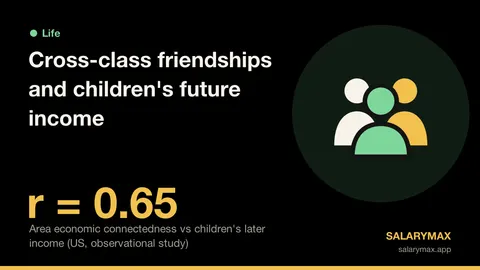 Cross-class friendships and children's future incomeA US study of 72.2 million Facebook users found that where low-income people have more high-income friends, poor children tend to earn more as adults. An area-level link.
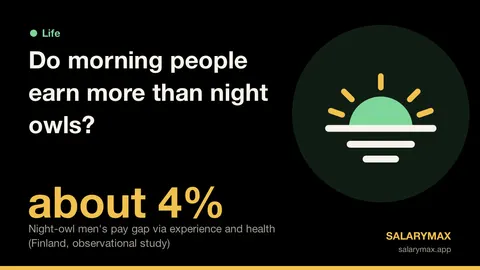 Do morning people earn more than night owls?In a Finnish birth cohort, evening-type men earned about 4% less, through less work experience and poorer health. Danish data show the same tendency. Neither is causal.
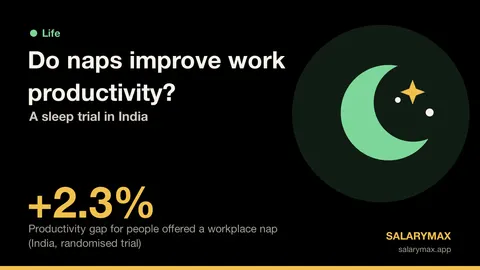 Do naps improve work productivity? A sleep trial in IndiaIn an Indian randomised trial of 452 adults, the offer of a daily 30-minute workplace nap raised productivity 2.3% but cut work time. More night sleep did not raise output or pay.
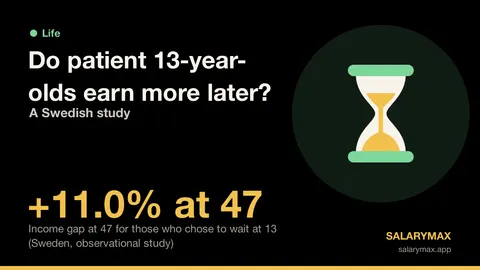 Do patient 13-year-olds earn more later? A Swedish studyIn a Swedish study of about 12,000 people followed from age 13 to their late 40s, those who chose to wait for more money tended to earn more. It is observational.
 Do smokers earn less? What wage studies actually showA US youth panel found smokers' wages were 4–8% lower, and Finnish twin data point the same way. A Japanese panel found no gap once personal differences were held fixed.
 Does a long commute pay off? Evidence from Germany and JapanIn a German household panel, people with longer commutes were less satisfied with life, and pay or housing did not make up for it. UK and Japanese studies are more mixed.
 Does air pollution lower productivity at work? US and ChinaOn a US farm, a 10 ppb fall in ozone raised harvest productivity by 5.5%. In China, call centre staff took fewer calls on polluted days. Both used natural daily swings.
 Does Childhood Self-Control Predict Adult Income?A New Zealand study of about 1,000 people followed to age 32 found that lower self-control in childhood went with lower adult income. It is observational, not destiny.
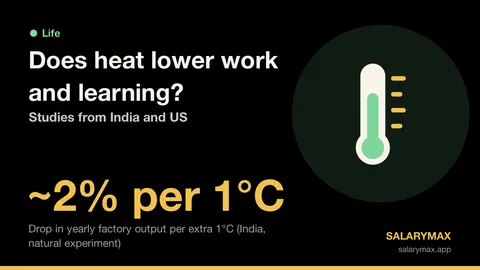 Does heat lower work and learning? Studies from India and USIndian factories produced about 2% less a year per extra degree Celsius. Among 10 million US students, hotter school years meant less learning without air conditioning.
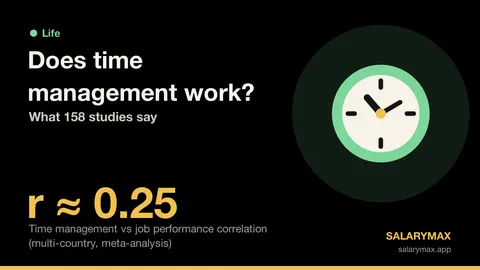 Does time management work? What 158 studies sayA meta-analysis of 158 studies and about 54,000 people found a moderate link between time management and job performance, and a slightly stronger link with well-being.
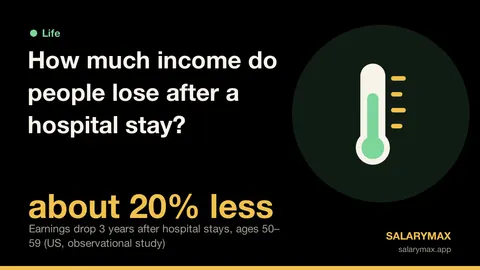 How much income do people lose after a hospital stay?In a US study of people in their 50s, yearly earnings were about 20% lower three years after a hospital stay. In the Netherlands, income fell 5% and did not recover.
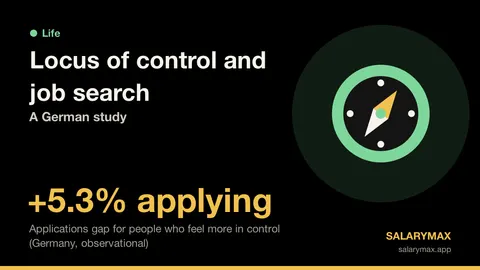 Locus of control and job search: a German studyIn a German study of about 8,000 newly unemployed people, those who felt life depends on their own actions applied more; those who credited luck set lower minimum pay.
 Screens versus paper books before bedIn a US experiment with 12 people, reading on a glowing e-reader before bed delayed sleep by about 10 minutes versus a printed book, and next-morning alertness was lower.
 The experiment that limited email to three checks a dayIn a Canadian experiment, people felt less daily stress in the week they checked email only three times a day, and did not feel more productive when checking freely.
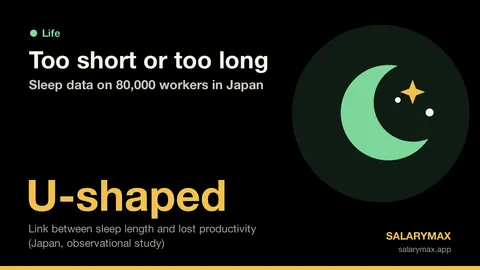 Too short or too long: sleep data on 80,000 workers in JapanA University of Tsukuba study of about 80,000 workers and over 2 million nights linked both short and long sleep to lower productivity. Why the app says about 7 hours.
 What happens when you quit social media for weeks?In a US randomised trial, people who quit Facebook for four weeks gained 60 minutes a day, saw family and friends more and felt slightly happier. Income was not measured.
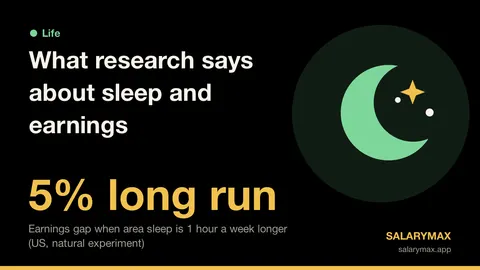 What research says about sleep and earningsA US study estimated that one more hour of weekly sleep in an area goes with about 5% higher long-run earnings. Japan's loss from short sleep was put at 2.92% of GDP.
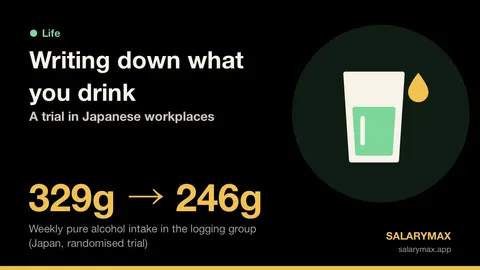 Writing down what you drink: a trial in Japanese workplacesIn a randomized trial at six Japanese workplaces, workers who logged their drinks daily for four weeks drank less and had more alcohol-free days than a comparison group.