Spending and saving: what the research says
Saving first, impulse buying, fixed costs, paying by card, income and happiness. What experiments and surveys have found about how people spend and save.
26 articles
 A reminder can change how you saveIn bank experiments in Bolivia, Peru and the Philippines, reminders of a savings goal helped more people reach it, especially messages naming the goal and the reward.
 Defaults are stronger than you thinkWhen a large US company made its retirement plan automatic enrollment, sign-ups rose sharply and many kept the default settings. The power of defaults, and the catch.
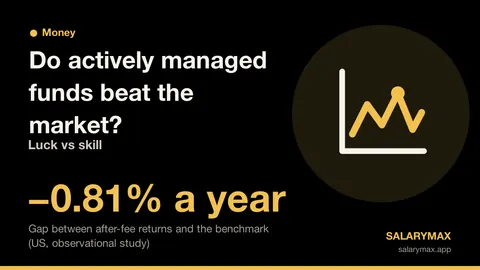 Do actively managed funds beat the market? Luck vs skillA US study of active equity funds (1984–2006) found that after fees they trailed benchmarks by 0.81–1.00% a year. Before fees they roughly matched the market.
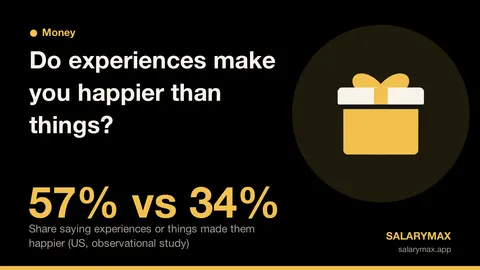 Do experiences make you happier than things?In a US phone survey of 1,263 adults, 57% said an experience made them happier than a thing; 34% said the reverse. A Canadian test found things bring joy more often.
 Do financial advisors improve investment returns?In Canadian data, advisors shaped clients' portfolios but tailored little, and advised portfolios cost 2.5% a year. Advisors' own net returns were −3% a year.
 Do lottery winners stop working? Income and happinessSwedish lottery studies find winners cut work earnings modestly, about equally by age, education and sex. Life satisfaction stayed higher for over a decade.
 Do money worries make it harder to think clearly?A 2013 US and India study said money worries briefly lowered thinking. A US study of 3,821 people found no payday gap, and only 4 of 20 scarcity-study replications held up.
 Do people who shop around pay less for the same goods?In US household scanner data, shopping twice as often went with 7–10% lower prices for the same goods, and older households paid least. In Japan, sales use mattered more.
 Do you spend more with a card than with cash?In a US ticket auction, students told to pay by card bid $61 on average, over twice the $29 bid by those paying cash. A meta-analysis of 71 papers finds a smaller effect.
 Does a higher income make you happier? The $75,000 debateUS studies find higher earners tend to rate their lives higher and feel better day to day. A mood plateau near $75,000 held only for the least happy fifth.
 Does earning less than your neighbours lower your happiness?In a US panel of about 10,000 people, those in higher-earning areas were less happy at the same income. In a Dutch lottery study, neighbours' wins did not reduce it.
 Does financial education change how people handle money?A 2022 meta-analysis of 76 randomised trials in 33 countries found financial education improved knowledge and saving. A 2014 review saw tiny effects from just 13 trials.
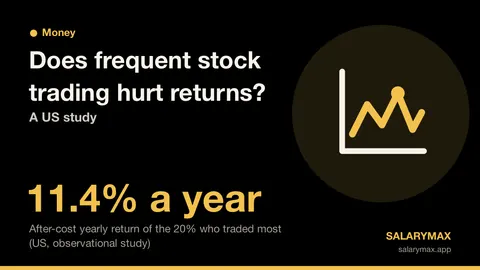 Does frequent stock trading hurt returns? A US studyIn a US study of 66,465 brokerage households (1991–96), the 20% who traded most earned 11.4% a year after costs, vs 17.9% for the market. Costs drove most of the gap.
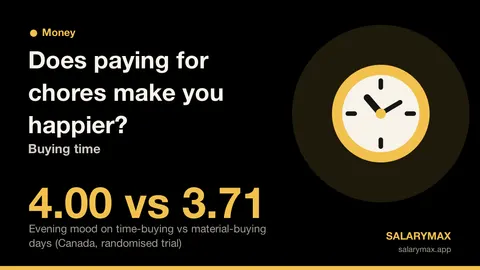 Does paying for chores make you happier? Buying timeSurveys of 6,271 people in the US, Canada, Denmark and the Netherlands link paying to save time with higher life satisfaction. A Canadian trial of 60 found better mood.
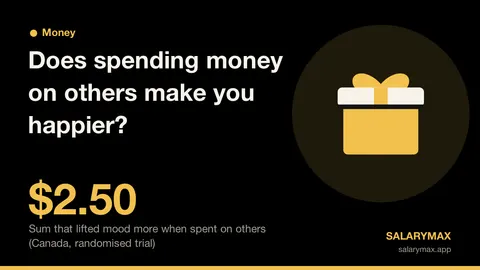 Does spending money on others make you happier?In the original team's large preregistered replications, buying a gift for someone raised happiness, while merely recalling past spending showed no or small gaps.
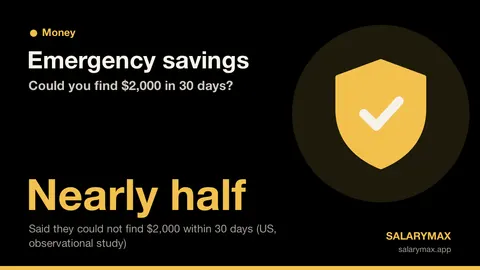 Emergency savings: could you find $2,000 in 30 days?In a 2009 US survey, 27.9% said they certainly could not raise $2,000 in 30 days and 22.2% probably could not. In Japan in 2022, 57.0% had three months of costs saved.
 How many people fail to refinance their mortgage?A US estimate using a random sample of mortgages (Dec 2010) found about 20% of unconstrained households who would gain from refinancing had not, losing a median $11,500.
 Low insurance deductibles: paying too much for small risksIn a US study, most home insurance buyers paid well above expected savings for low deductibles. In a flood insurance working paper, over 94% picked one of the two lowest.
 Make the saving promise with your future selfAt a US company, people who committed part of future pay rises to saving went from a 3.5% to a 13.6% saving rate over 40 months. How it works and how to read it.
 Selling winners, holding losers: the disposition effectIn 10,000 US brokerage accounts (1987–93), rising stocks were over 1.5 times as likely to be sold as falling ones, yet the winners sold later beat the losers kept.
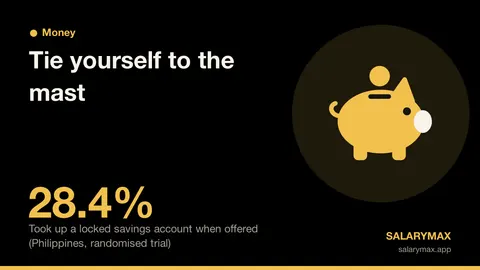 Tie yourself to the mastIn a Philippine randomized trial, 28.4% of people offered a savings account locking money until a goal opened one, and the offered group had higher balances a year later.
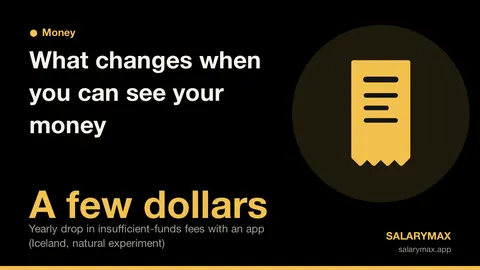 What changes when you can see your moneyIn Iceland, people who started using a personal finance app paid fewer insufficient-funds fees. The drop was small, a few dollars a year, and other results were unclear.
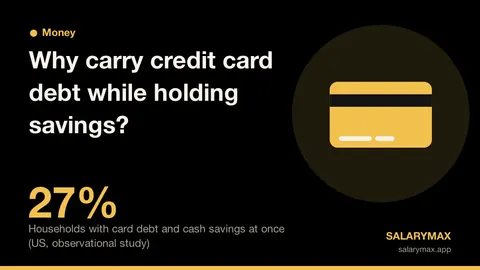 Why carry credit card debt while holding savings?In the 2001 US Survey of Consumer Finances, 27% of households carried card debt while holding sizeable cash. A US study found debt rose by 10–14% of any limit increase.
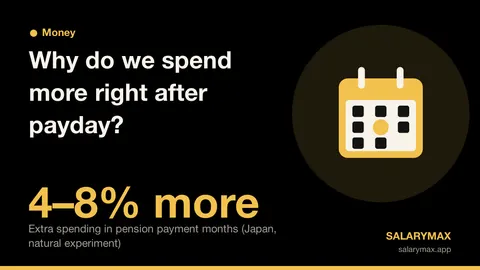 Why do we spend more right after payday?When Japan paid pensions every three months, older couples spent 4–8% more in payment months. In the US, food-stamp households ate 10–15% fewer calories by month end.
 Why sleep on a purchaseIn the US, people with a stronger pull toward the present carried more revolving card debt, and people who had just used up self-control spent more in an experiment.
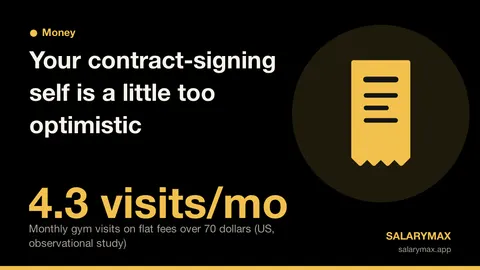 Your contract-signing self is a little too optimisticAt US gyms, members on flat fees over 70 dollars a month went just 4.3 times a month, over 17 dollars a visit. Misjudged phone use cost an estimated 76 dollars a year.