Learn the habits on the rising side, from research.
Movement, life, work and money. What studies have found about habits and income, with the country, the data and the kind of study. Studies describe averages; nothing here promises you higher income.
Work and income: what the research says
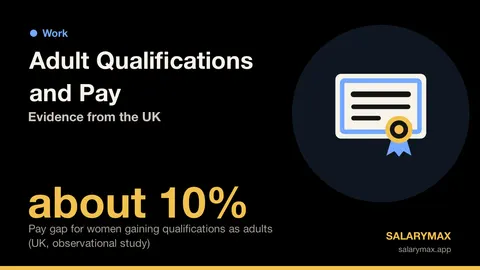 Adult Qualifications and Pay: Evidence from the UKIn UK panel data, women who gained adult qualifications earned about 10% more per hour in the medium run. For men, the gap vanished once prior pay growth was counted.
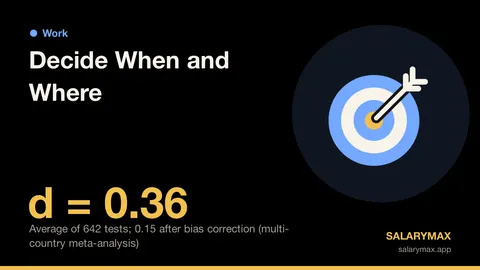 Decide When and WhereDeciding ahead when, where and what you will do (an implementation intention) averaged d = 0.65 across 94 tests. A newer analysis of 642 tests finds a smaller effect.
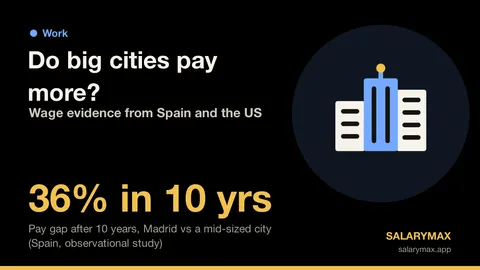 Do big cities pay more? Wage evidence from Spain and the USSpanish data on 157,000 men show similar workers earned 9% more in Madrid than in a mid-sized city at first, 36% more after 10 years. Observational; before living costs.
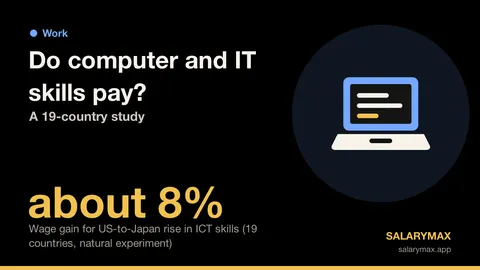 Do computer and IT skills pay? A 19-country studyA 19-country study using OECD PIAAC data and broadband rollout estimated that raising ICT skills from the US to the Japanese average would lift wages by about 8%.
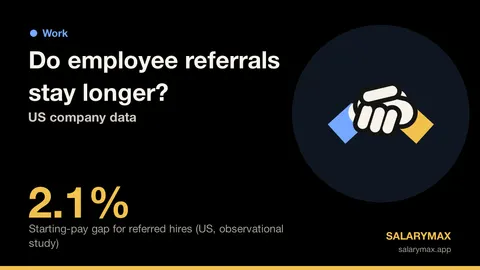 Do employee referrals stay longer? US company dataIn US company records, referred applicants were more likely to be hired and less likely to quit. Starting pay was 2.1% higher, but the gap faded in about three years.
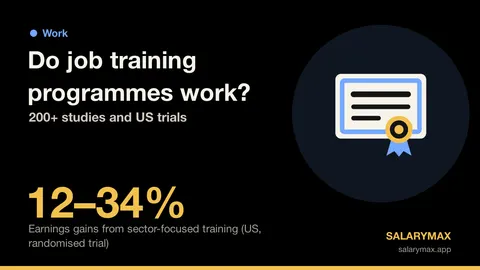 Do job training programmes work? 200+ studies and US trialsA review of 200+ evaluations found training effects on jobs are small at first and grow after two years. In US randomised trials, sector training raised earnings 12–34%.
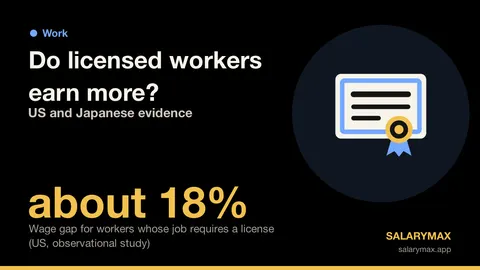 Do licensed workers earn more? US and Japanese evidenceIn a 2008 US survey, workers in jobs requiring a license earned about 18% more. A Japanese survey found a similar link for licenses used at work. Both are observational.
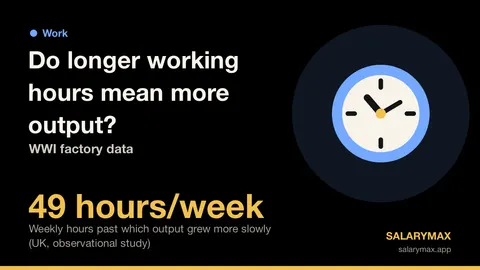 Do longer working hours mean more output? WWI factory dataIn British World War I munitions factories, output rose with hours up to about 49 a week, then slowed; 70 hours produced little more than 56. The data are observational.
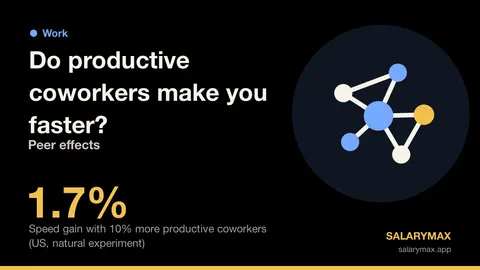 Do productive coworkers make you faster? Peer effectsIn a US supermarket study, when same-shift coworkers were 10% more productive, cashiers worked 1.7% faster. Across a German city, the same gap meant just 0.1% higher pay.
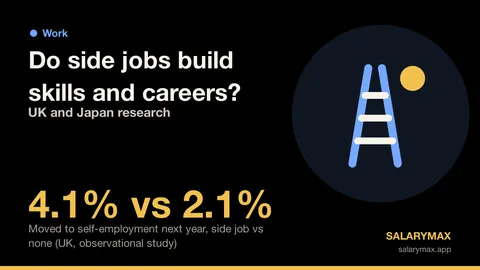 Do side jobs build skills and careers? UK and Japan researchIn UK working-paper data on men, 4.1% with a second job became self-employed the next year, versus 2.1% without one. A Japanese panel study found benefits for only some.
 Do Weak Ties Help You Change Jobs? A 20-Million-User TestRandomized tests on over 20 million LinkedIn users found moderately weak ties led to the most job moves. They measured mobility, not pay; Japan data favored strong ties.
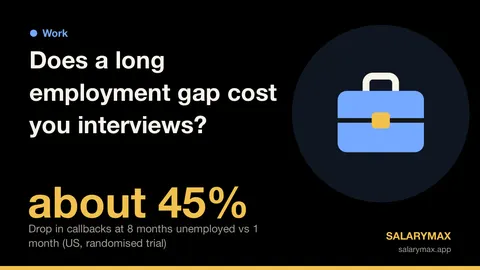 Does a long employment gap cost you interviews?In a US experiment with about 12,000 fictitious résumés, an 8-month jobless spell drew about 45% fewer callbacks than a 1-month spell. Most of the drop came early.
 Does being happier make you more productive at work?In UK experiments, people randomly put in a better mood did about 12% more piece-rate work. At UK call centres, happier weeks brought more sales, even in a weather test.
 Does changing jobs raise pay? US research and Japan dataA US study of young men found at least a third of wage growth in their first 10 years came at job changes. In Japan in 2025, 40.8% of job changers got more, 31.0% less.
 Does self-employment pay more than a job? US researchA classic US study found median earnings after 10 years of self-employment about 35% below paid work. Incorporated owners tended to earn more. The data are observational.
 Does working from home hurt performance and promotion?Two randomized experiments at Chinese travel firms found working from home did not lower performance and cut quitting, though full-time home workers were promoted less.
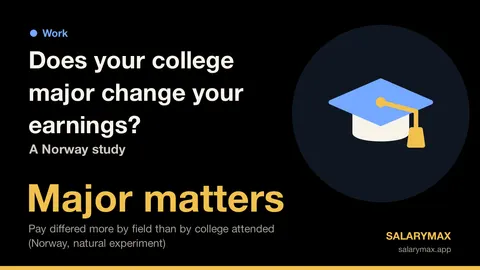 Does your college major change your earnings? A Norway studyA natural experiment at Norway's admission cutoffs found similar applicants earned very different sums by field. A working paper put science at about 3 times humanities.
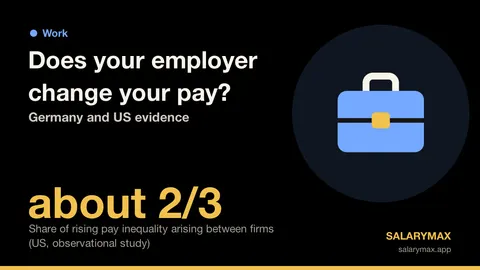 Does your employer change your pay? Germany and US evidenceIn US data, two-thirds of rising earnings inequality arose between firms, mostly from who works where. West German men who moved to higher-paying workplaces gained.
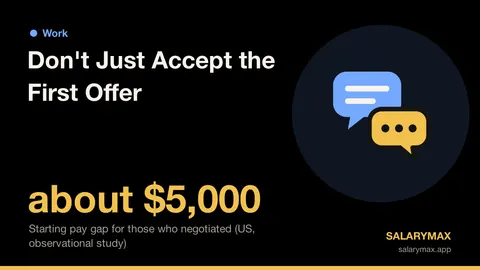 Don't Just Accept the First OfferIn a US survey of 149 new hires, those who negotiated had starting salaries about $5,000 higher on average. Here is how to prepare, in three parts.
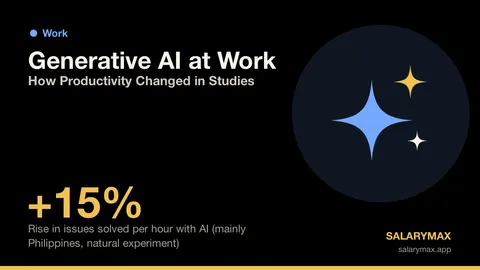 Generative AI at Work: How Productivity Changed in StudiesIn a study of 5,172 support agents, generative AI raised issues solved per hour by 15%, most for newer staff; a writing test cut time by 40%. Effects on pay are unknown.
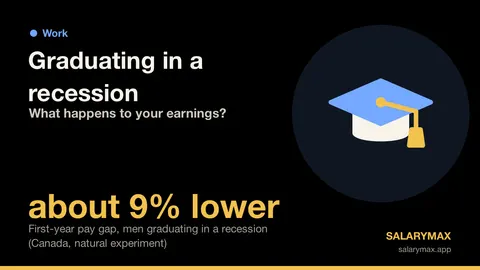 Graduating in a recession: what happens to your earnings?Canadian men who left college in a typical recession earned about 9% less at first, and the gap took about 10 years to fade. In Japan, less-educated men were hit longer.
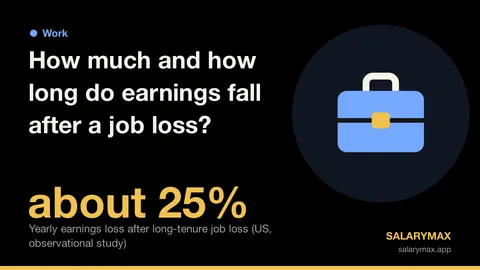 How much and how long do earnings fall after a job loss?In Pennsylvania, long-tenured US workers who left struggling firms lost about 25% of prior earnings a year over time. In Japan, men's income was still lower 3 years on.
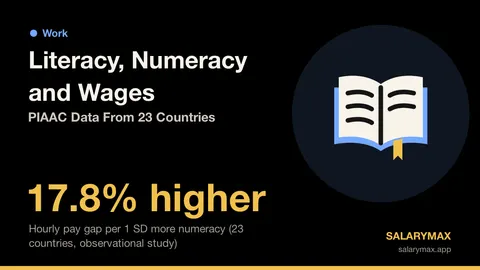 Literacy, Numeracy and Wages: PIAAC Data From 23 CountriesA 23-country study of the OECD PIAAC survey found 1 SD more numeracy went with 17.8% higher hourly pay on average, 18.4% in Japan and about 28% in the US. A correlation.
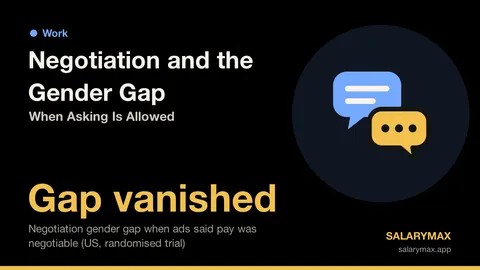 Negotiation and the Gender Gap: When Asking Is AllowedIn a US experiment with nearly 2,500 job seekers, saying in the job ad that wages are negotiable made the gender gap in negotiation disappear. Read with data from Sweden.
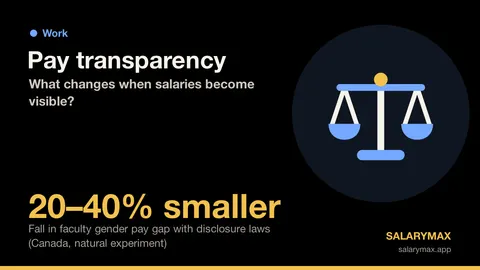 Pay transparency: what changes when salaries become visible?Canadian laws making university faculty salaries public cut the gender pay gap by about 20–40%. In a Southeast Asian bank experiment, learning a boss's pay raised hours.
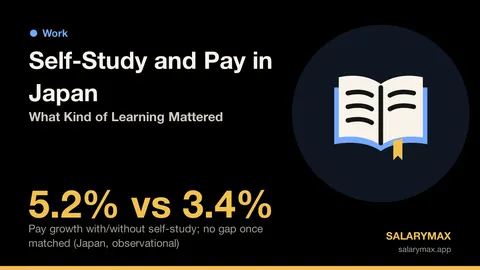 Self-Study and Pay in Japan: What Kind of Learning MatteredIn Japanese panel data, regular employees who did self-study saw income grow 5.2% in two years, versus 3.4% for others, but the gap vanished once job quality was matched.
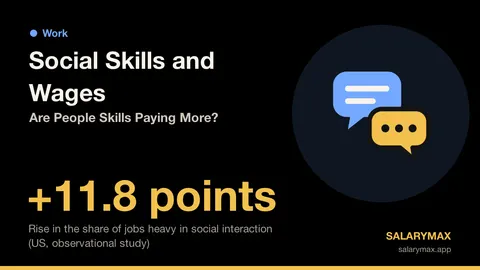 Social Skills and Wages: Are People Skills Paying More?A US study found that jobs with lots of social interaction grew by 11.8 points as a share of work from 1980 to 2012, and pay rose most where math and social skills meet.
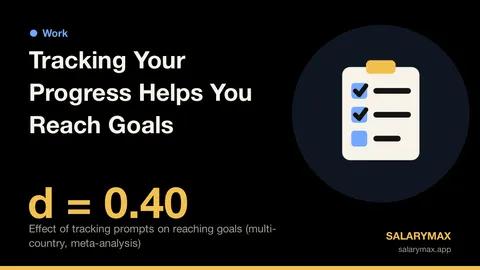 Tracking Your Progress Helps You Reach GoalsA meta-analysis of 138 experiments found prompting people to monitor their progress improved goal attainment (d = 0.40). Turn a one-line daily note into review material.
 Training and Wages: What German Data ShowIn German panel data, people who took training in general, transferable skills earned about 5–6% more on average. Firm-specific training showed no clear difference.
 What Procrastination Is Linked ToA meta-analysis of 691 correlations linked procrastination most strongly to task unpleasantness, a distant deadline, self-efficacy, impulsiveness and conscientiousness.
Spending and saving: what the research says
 A reminder can change how you saveIn bank experiments in Bolivia, Peru and the Philippines, reminders of a savings goal helped more people reach it, especially messages naming the goal and the reward.
 Defaults are stronger than you thinkWhen a large US company made its retirement plan automatic enrollment, sign-ups rose sharply and many kept the default settings. The power of defaults, and the catch.
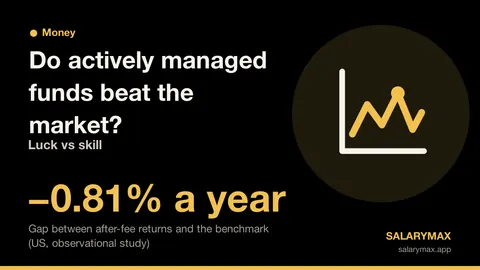 Do actively managed funds beat the market? Luck vs skillA US study of active equity funds (1984–2006) found that after fees they trailed benchmarks by 0.81–1.00% a year. Before fees they roughly matched the market.
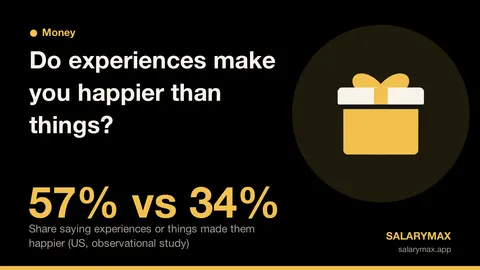 Do experiences make you happier than things?In a US phone survey of 1,263 adults, 57% said an experience made them happier than a thing; 34% said the reverse. A Canadian test found things bring joy more often.
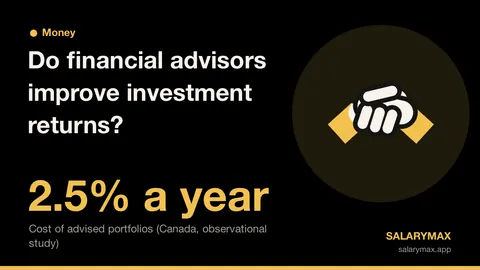 Do financial advisors improve investment returns?In Canadian data, advisors shaped clients' portfolios but tailored little, and advised portfolios cost 2.5% a year. Advisors' own net returns were −3% a year.
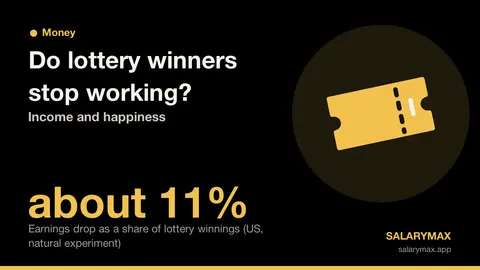 Do lottery winners stop working? Income and happinessSwedish lottery studies find winners cut work earnings modestly, about equally by age, education and sex. Life satisfaction stayed higher for over a decade.
 Do money worries make it harder to think clearly?A 2013 US and India study said money worries briefly lowered thinking. A US study of 3,821 people found no payday gap, and only 4 of 20 scarcity-study replications held up.
 Do people who shop around pay less for the same goods?In US household scanner data, shopping twice as often went with 7–10% lower prices for the same goods, and older households paid least. In Japan, sales use mattered more.
 Do you spend more with a card than with cash?In a US ticket auction, students told to pay by card bid $61 on average, over twice the $29 bid by those paying cash. A meta-analysis of 71 papers finds a smaller effect.
 Does a higher income make you happier? The $75,000 debateUS studies find higher earners tend to rate their lives higher and feel better day to day. A mood plateau near $75,000 held only for the least happy fifth.
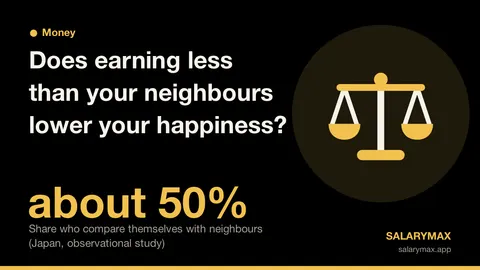 Does earning less than your neighbours lower your happiness?In a US panel of about 10,000 people, those in higher-earning areas were less happy at the same income. In a Dutch lottery study, neighbours' wins did not reduce it.
 Does financial education change how people handle money?A 2022 meta-analysis of 76 randomised trials in 33 countries found financial education improved knowledge and saving. A 2014 review saw tiny effects from just 13 trials.
 Does frequent stock trading hurt returns? A US studyIn a US study of 66,465 brokerage households (1991–96), the 20% who traded most earned 11.4% a year after costs, vs 17.9% for the market. Costs drove most of the gap.
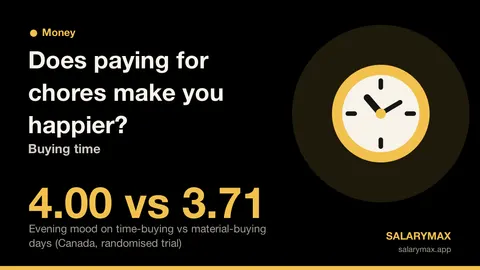 Does paying for chores make you happier? Buying timeSurveys of 6,271 people in the US, Canada, Denmark and the Netherlands link paying to save time with higher life satisfaction. A Canadian trial of 60 found better mood.
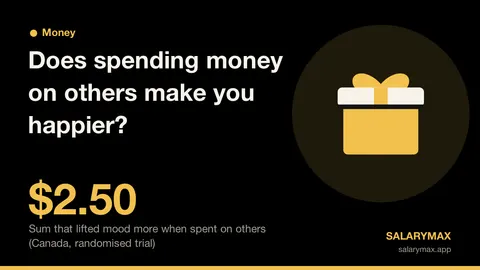 Does spending money on others make you happier?In the original team's large preregistered replications, buying a gift for someone raised happiness, while merely recalling past spending showed no or small gaps.
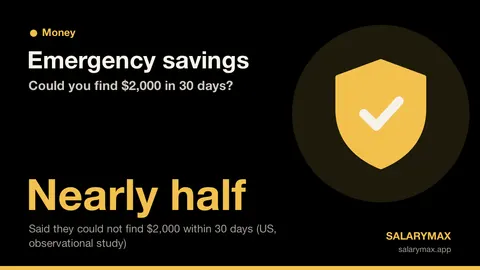 Emergency savings: could you find $2,000 in 30 days?In a 2009 US survey, 27.9% said they certainly could not raise $2,000 in 30 days and 22.2% probably could not. In Japan in 2022, 57.0% had three months of costs saved.
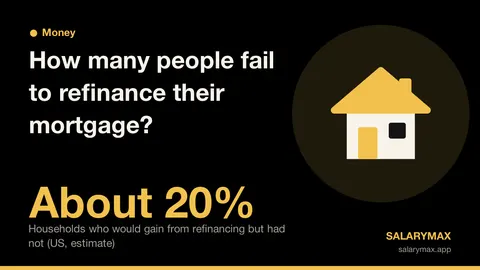 How many people fail to refinance their mortgage?A US estimate using a random sample of mortgages (Dec 2010) found about 20% of unconstrained households who would gain from refinancing had not, losing a median $11,500.
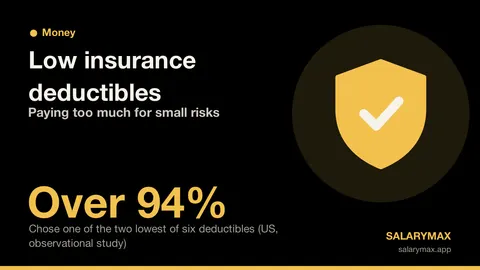 Low insurance deductibles: paying too much for small risksIn a US study, most home insurance buyers paid well above expected savings for low deductibles. In a flood insurance working paper, over 94% picked one of the two lowest.
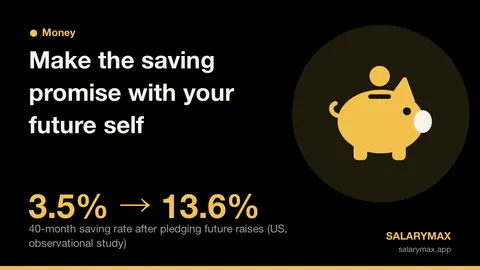 Make the saving promise with your future selfAt a US company, people who committed part of future pay rises to saving went from a 3.5% to a 13.6% saving rate over 40 months. How it works and how to read it.
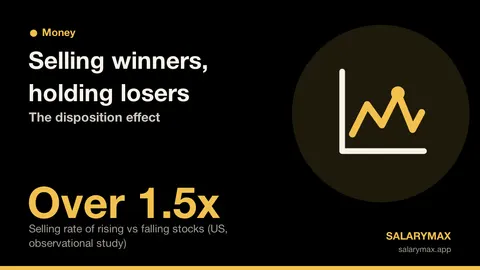 Selling winners, holding losers: the disposition effectIn 10,000 US brokerage accounts (1987–93), rising stocks were over 1.5 times as likely to be sold as falling ones, yet the winners sold later beat the losers kept.
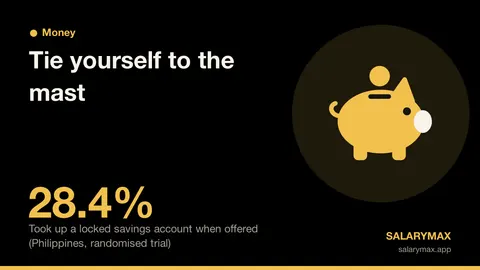 Tie yourself to the mastIn a Philippine randomized trial, 28.4% of people offered a savings account locking money until a goal opened one, and the offered group had higher balances a year later.
 What changes when you can see your moneyIn Iceland, people who started using a personal finance app paid fewer insufficient-funds fees. The drop was small, a few dollars a year, and other results were unclear.
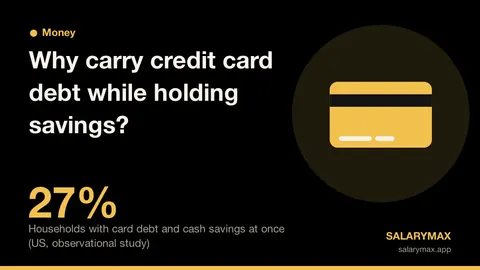 Why carry credit card debt while holding savings?In the 2001 US Survey of Consumer Finances, 27% of households carried card debt while holding sizeable cash. A US study found debt rose by 10–14% of any limit increase.
 Why do we spend more right after payday?When Japan paid pensions every three months, older couples spent 4–8% more in payment months. In the US, food-stamp households ate 10–15% fewer calories by month end.
 Why sleep on a purchaseIn the US, people with a stronger pull toward the present carried more revolving card debt, and people who had just used up self-control spent more in an experiment.
 Your contract-signing self is a little too optimisticAt US gyms, members on flat fees over 70 dollars a month went just 4.3 times a month, over 17 dollars a visit. Misjudged phone use cost an estimated 76 dollars a year.
Daily habits and income: what the research says
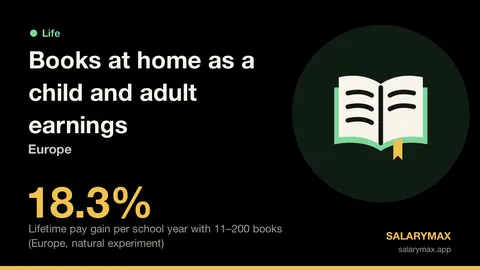 Books at home as a child and adult earnings: EuropeIn a study of men aged 50+ in nine European countries, extra schooling paid off more for those with many books at home at age 10. It did not study adult reading.
 Cross-class friendships and children's future incomeA US study of 72.2 million Facebook users found that where low-income people have more high-income friends, poor children tend to earn more as adults. An area-level link.
 Do morning people earn more than night owls?In a Finnish birth cohort, evening-type men earned about 4% less, through less work experience and poorer health. Danish data show the same tendency. Neither is causal.
 Do naps improve work productivity? A sleep trial in IndiaIn an Indian randomised trial of 452 adults, the offer of a daily 30-minute workplace nap raised productivity 2.3% but cut work time. More night sleep did not raise output or pay.
 Do patient 13-year-olds earn more later? A Swedish studyIn a Swedish study of about 12,000 people followed from age 13 to their late 40s, those who chose to wait for more money tended to earn more. It is observational.
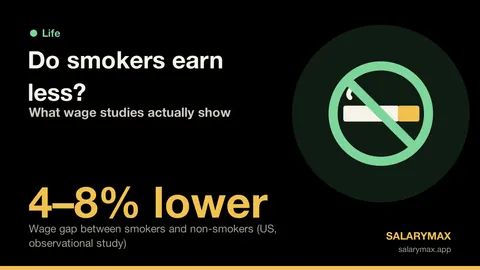 Do smokers earn less? What wage studies actually showA US youth panel found smokers' wages were 4–8% lower, and Finnish twin data point the same way. A Japanese panel found no gap once personal differences were held fixed.
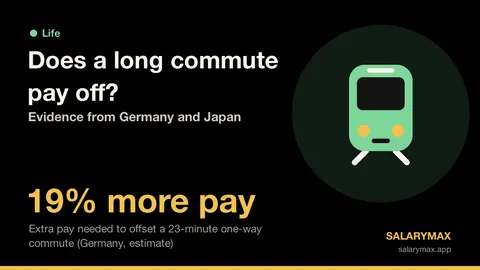 Does a long commute pay off? Evidence from Germany and JapanIn a German household panel, people with longer commutes were less satisfied with life, and pay or housing did not make up for it. UK and Japanese studies are more mixed.
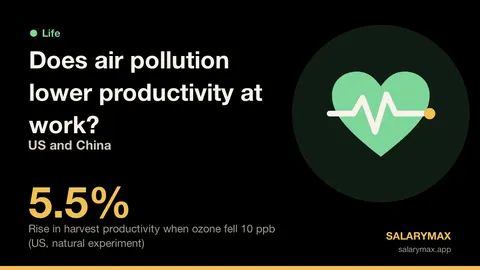 Does air pollution lower productivity at work? US and ChinaOn a US farm, a 10 ppb fall in ozone raised harvest productivity by 5.5%. In China, call centre staff took fewer calls on polluted days. Both used natural daily swings.
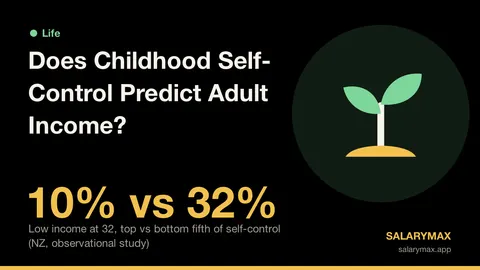 Does Childhood Self-Control Predict Adult Income?A New Zealand study of about 1,000 people followed to age 32 found that lower self-control in childhood went with lower adult income. It is observational, not destiny.
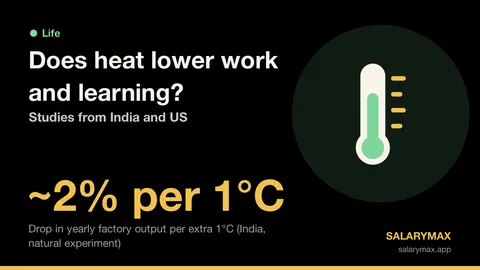 Does heat lower work and learning? Studies from India and USIndian factories produced about 2% less a year per extra degree Celsius. Among 10 million US students, hotter school years meant less learning without air conditioning.
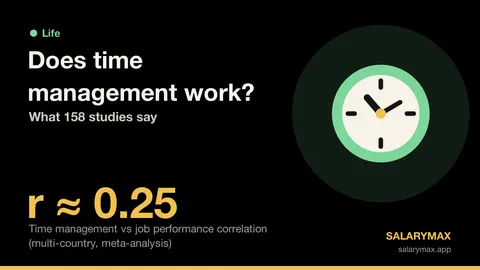 Does time management work? What 158 studies sayA meta-analysis of 158 studies and about 54,000 people found a moderate link between time management and job performance, and a slightly stronger link with well-being.
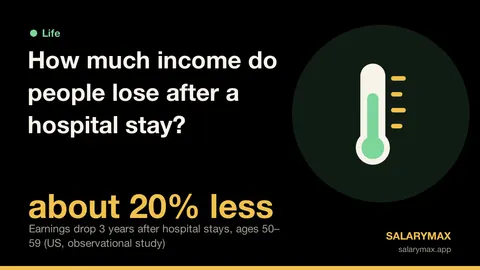 How much income do people lose after a hospital stay?In a US study of people in their 50s, yearly earnings were about 20% lower three years after a hospital stay. In the Netherlands, income fell 5% and did not recover.
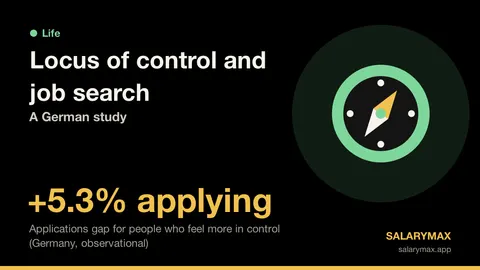 Locus of control and job search: a German studyIn a German study of about 8,000 newly unemployed people, those who felt life depends on their own actions applied more; those who credited luck set lower minimum pay.
 Screens versus paper books before bedIn a US experiment with 12 people, reading on a glowing e-reader before bed delayed sleep by about 10 minutes versus a printed book, and next-morning alertness was lower.
 The experiment that limited email to three checks a dayIn a Canadian experiment, people felt less daily stress in the week they checked email only three times a day, and did not feel more productive when checking freely.
 Too short or too long: sleep data on 80,000 workers in JapanA University of Tsukuba study of about 80,000 workers and over 2 million nights linked both short and long sleep to lower productivity. Why the app says about 7 hours.
 What happens when you quit social media for weeks?In a US randomised trial, people who quit Facebook for four weeks gained 60 minutes a day, saw family and friends more and felt slightly happier. Income was not measured.
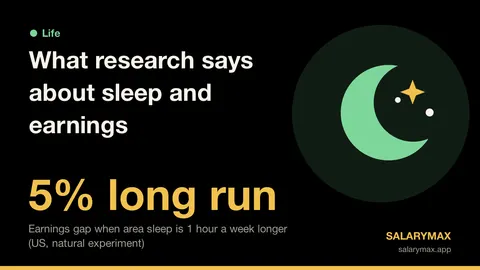 What research says about sleep and earningsA US study estimated that one more hour of weekly sleep in an area goes with about 5% higher long-run earnings. Japan's loss from short sleep was put at 2.92% of GDP.
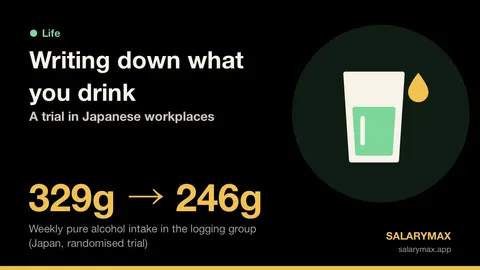 Writing down what you drink: a trial in Japanese workplacesIn a randomized trial at six Japanese workplaces, workers who logged their drinks daily for four weeks drank less and had more alcohol-free days than a comparison group.
Exercise and income: what the research says
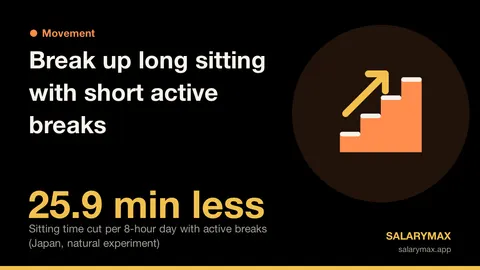 Break up long sitting with short active breaksIn a study of Tokyo offices, workplaces that added short active breaks cut sitting time by 25.9 minutes per 8-hour workday. What the study found, and its limits.
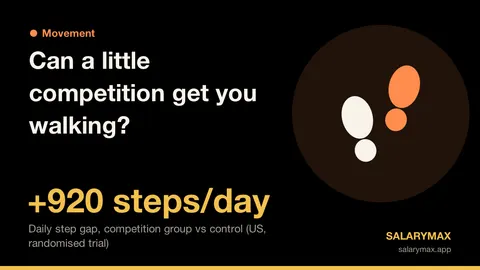 Can a little competition get you walking?In a US randomised trial of 602 adults, all three gamified approaches increased daily steps, and only the competition group kept a difference after the program ended.
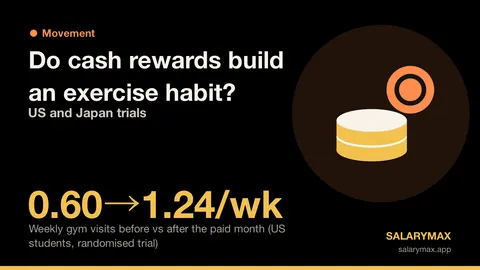 Do cash rewards build an exercise habit? US and Japan trialsIn a US experiment, students paid to use the gym for a month went from 0.60 to 1.24 weekly visits after pay ended. In trials of workers and in Japan, it faded.
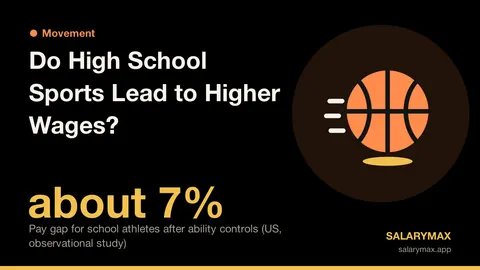 Do High School Sports Lead to Higher Wages?In US data, former high school athletes earned 14% to 19% more, about 7% after adjusting for family and ability. A Japanese study found no wage gain from school clubs.
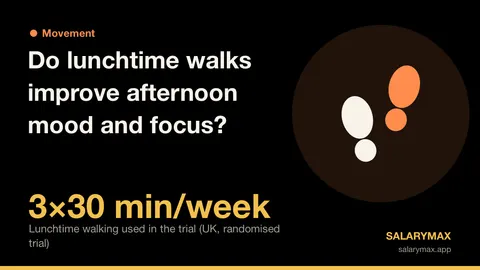 Do lunchtime walks improve afternoon mood and focus?In a UK randomised trial of 56 inactive staff, 30-minute lunchtime walks three times a week raised enthusiasm at work. In Finland, park walks went with better focus.
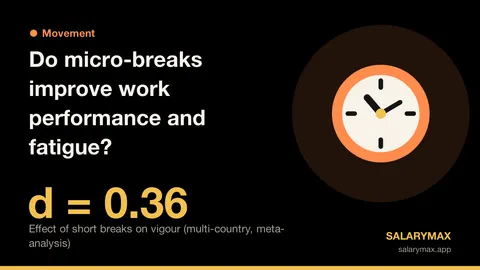 Do micro-breaks improve work performance and fatigue?A meta-analysis of 22 experimental samples (2,335 people) found breaks of 10 minutes or less slightly raised vigour and cut fatigue, with no clear effect on performance.
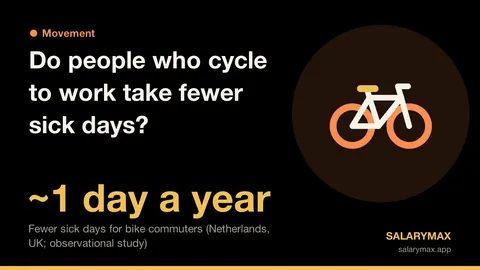 Do people who cycle to work take fewer sick days?A Dutch study of 1,236 employees found cycle commuters had just over one fewer sick day a year, and a UK study of 801 people, about one fewer. Both are observational.
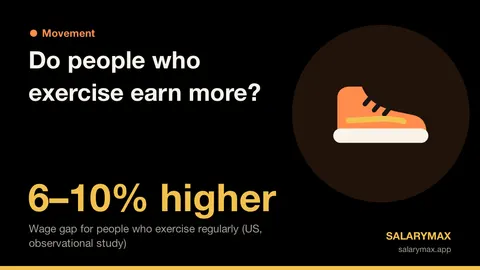 Do people who exercise earn more?Studies in the US and Germany find that people who exercise tend to earn more, with wages 6 to 10% higher in US data. These are observational data, not proof of cause.
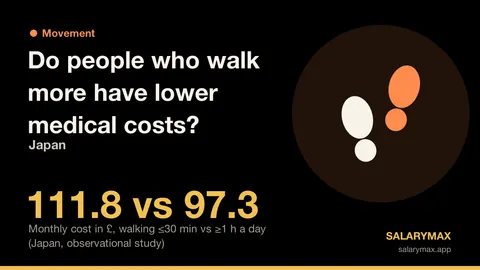 Do people who walk more have lower medical costs? JapanA Japanese study of 27,000 people aged 40 to 79 found that those walking an hour or more a day had lower monthly medical costs. But healthier people may simply walk more.
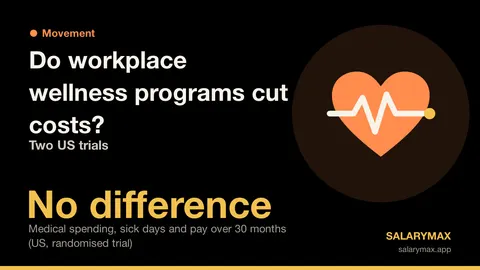 Do workplace wellness programs cut costs? Two US trialsTwo US randomized trials found workplace wellness programs raised screening and self-reported exercise but did not change medical spending, sick days or job performance.
 Does exercising during work hours hurt productivity?In a randomised trial at six Swedish dental workplaces, moving 2.5 hours a week of work time to exercise did not cut patients treated. The trial was small: 177 women.
 Does temptation bundling help you keep exercising?In a US trial, gym-only audiobooks raised visits by 51% in week one, but the effect faded. A 6,792-person follow-up found a 10–14% higher chance of a weekly workout.
 Does walking help you come up with ideas?In Stanford experiments, 81% of students came up with more ideas walking than sitting. A 2026 meta-analysis of 23 studies also found a large effect, mostly in students.
 Exercise and Long-Term Income: A Finnish Twin StudyA study of 5,042 male twins in Finland found that the more physically active twin in each pair tended to have higher income over 15 years. It was not a randomized trial.
 Fitness at 18 and Later Education and CareersA study of 1.2 million Swedish men found that those fitter at 18 scored higher on IQ tests and more often earned degrees and high-status jobs. Strength showed no link.
 Strength training two to three days a weekJapan's Physical Activity and Exercise Guide 2023 advises adults to do strength training two to three days a week. What it says and does not, and how to start at home.
 What changed when Japanese employees started exercisingA Japanese panel study of 6,576 full-time employees found that people who started exercising showed higher work engagement, but no significant change in presenteeism.
 What gets people to the gym? A megastudy of 54 ideasIn a US test of 54 programs on 61,293 gym members, 45% raised weekly visits by 9–27%. A small reward for returning after a missed workout did best.
 What the sports line on your CV signalsIn a Swedish field experiment, CVs listing a leisure sport had a callback rate about 2 percentage points higher. The researcher reads sport as a signal of sociability.
 Where the 8,000-steps target comes fromJapan's health ministry advises adults to take about 8,000 steps a day or more. In an analysis of 15 cohorts, people who walked more tended to have a lower risk of death.
How to read research on habits and income
 Education and Earnings: Evidence from Twins and Birth MonthsAmong identical twins in the US and Japan, each year of schooling went with about 9% higher earnings. Twin and birth-month studies help separate schooling from ability.
 Habits take about 66 days, and missing a day is fineIn a UK study, the median time for a new behavior to become automatic was 66 days, ranging from 18 to 254 days. Missing one day had little effect on forming the habit.
 How strong is the evidence? Trials, natural experimentsIn a US job-training study, many estimates from observational data failed to match a randomised trial. The strengths and limits of each kind of study, and what to check.
 How to read habit and income researchThat exercisers tend to earn more and that more sleep leads to higher earnings are different kinds of claims. Three research designs, and how far each one lets you go.
 Money knowledge and retirement planning: Japan, US, GermanyStudies in the US, Germany and Japan find people who know more about money tend to plan for retirement. Japan's 2022 survey: 50.7% correct on household management.
 What research says about streaks, tough talk and kind wordsIn seven US experiments, showing a streak as broken made people less likely to keep going, and a feedback review found over a third of feedback lowered performance.
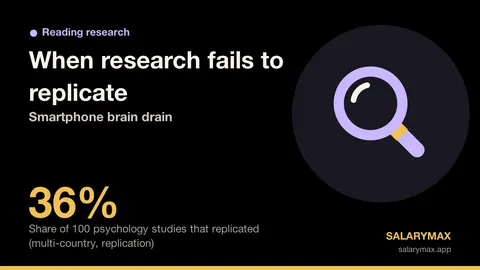 When research fails to replicate: smartphone brain drainA 2017 US study reported that just having your smartphone nearby dulls thinking, but a preregistered replication did not reproduce it. How SalaryMax picks its evidence.